


LG Refrigerator FU Error: Freezer Cycle Fault Fix
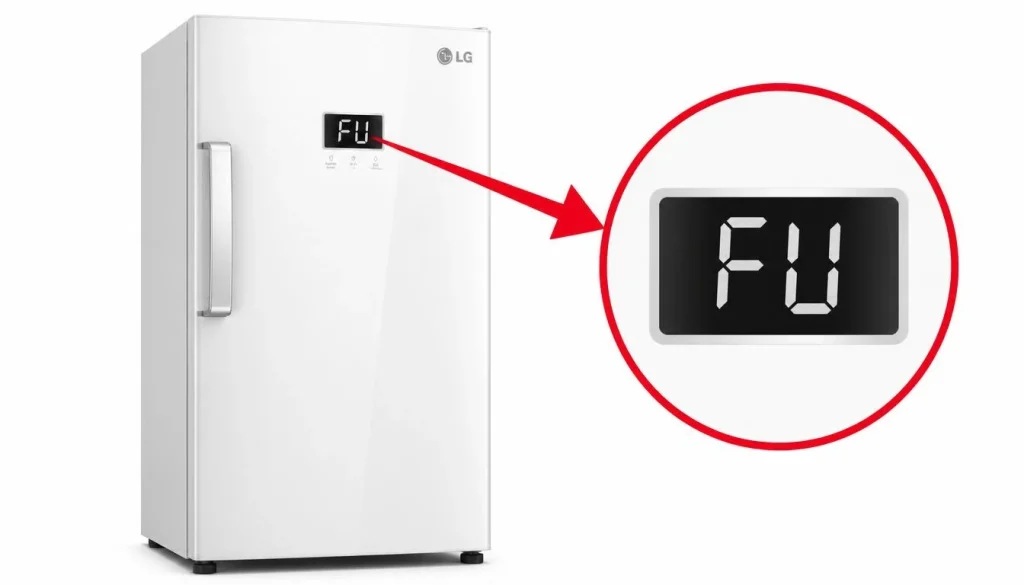
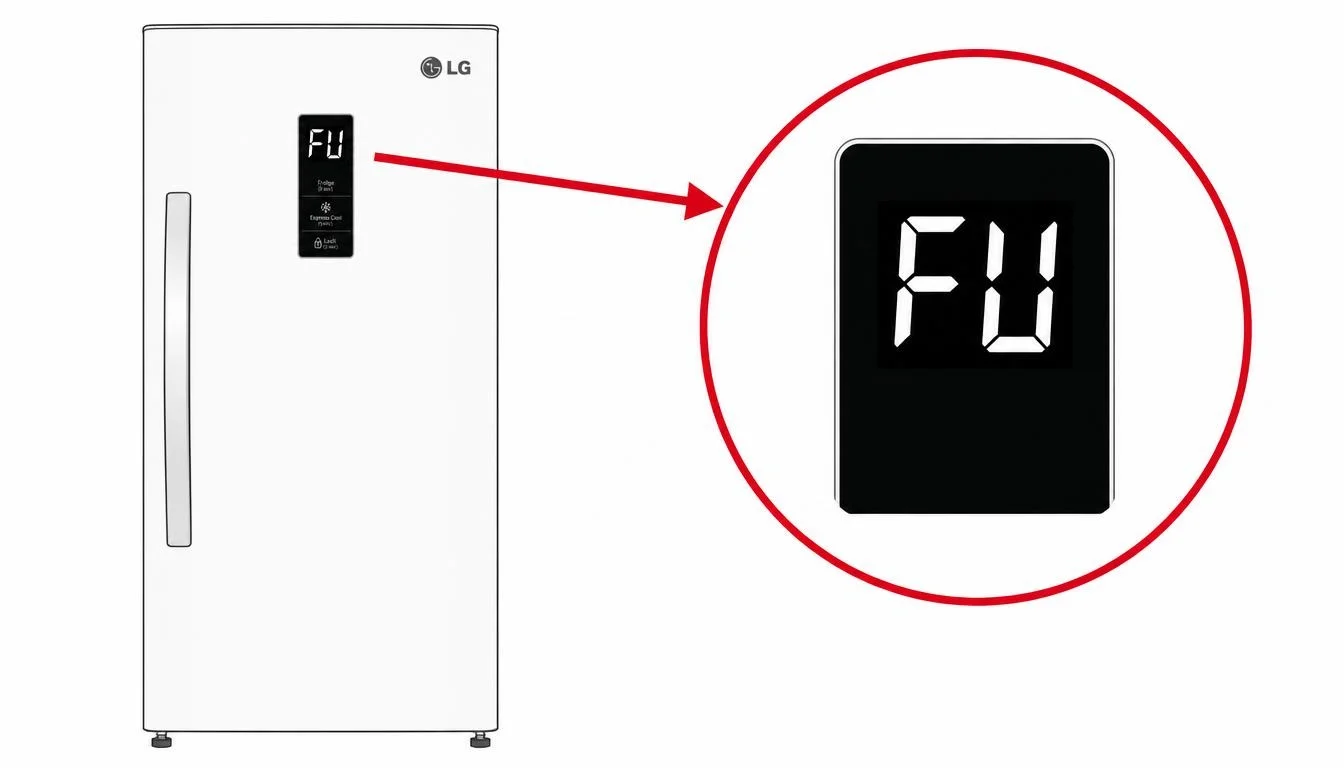
When “FU” appears on the display of an LG refrigerator, the machine is reporting that its freezer compartment did not cool as expected within the time the control board allows. LG’s official documentation defines the LG refrigerator FU error as a Cycle error: the code indicates a freezer compartment fault, and LG specifies the measurement behind it—after 10 minutes of starting the appliance, the temperature in the freezer has not dropped below 3.5°C, or during operation the temperature has risen above 3.5°C.
The LG refrigerator FU error is therefore a performance-based code, not a direct sensor failure like FS or a direct fan blockage like FF. The control board set a target, watched the clock, and reported that the freezer did not reach the target within the allowed window. The cause can be something as simple as a door seal that is not sealing, food blocking the air vents, an incorrect temperature setting, or a power supply problem—or it can be a genuine fault in the cooling system itself.
This distinction matters because LG’s own documentation breaks its usual “request service” instruction for the FU code and publishes owner-level steps. The sequence begins with power quality, then moves through the temperature setting, door usage, air vents, and door seals, and only then reaches the cooling system. This article explains what the LG refrigerator FU error means, the exact conditions that trigger it, the causes in the order LG’s checks address them, the step-by-step resolution procedure including LG’s paper test for door seals, the safety and urgency considerations, when the code requires professional service, and the practical habits that reduce the chance of recurrence.
?What Does the LG Refrigerator FU Error Mean
The LG refrigerator FU error means that the freezer did not reach its target temperature within the monitored period. LG’s error code guide states this directly: the FU code indicates a freezer compartment fault, and it specifies the threshold—after 10 minutes of starting the appliance, the freezer temperature has not dropped below 3.5°C, or during operation the temperature has risen above 3.5°C.
LG’s documentation classifies the code as a Cycle error. The term “cycle” is significant. The code is not saying that a specific component has failed; it is saying that the cooling cycle did not achieve the result it was supposed to achieve. The freezer was expected to pull down below 3.5°C within ten minutes of startup, or to hold below 3.5°C during operation, and it did not. The control board reports the shortfall as FU.
This is why the LG refrigerator FU error appears in LG’s master fault list with owner-level steps attached, rather than a blanket request-service instruction. LG treats FU as a code that is frequently fixable without a visit, and its published sequence reflects that judgment. The code can be caused by the conditions around the refrigerator—the power supply, the door seal, the airflow, the temperature setting—rather than by a failed part inside the sealed system.
The Trigger Conditions in Detail
The LG refrigerator FU error has two trigger conditions, and both are time-and-temperature measurements.
The startup condition is that after 10 minutes of starting the appliance, the freezer temperature has not dropped below 3.5°C. This condition applies when the refrigerator is first powered on or restarted. The compressor and fans have ten minutes to pull the freezer down to the target, and if the temperature is still at or above 3.5°C at that point, the code is posted.
The operating condition is that during operation, the freezer temperature has risen above 3.5°C. This condition applies while the refrigerator is running normally. If the freezer was below 3.5°C and then rose above it, the control board interprets the rise as a cycle fault and posts FU.
Both conditions use the same threshold: 3.5°C. This is a higher temperature than a typical freezer set point of -18°C, which means the code is triggered well before the freezer reaches a dangerous temperature for most frozen food. The code is an early warning that the cooling cycle is not performing as expected, not a report that the freezer has already warmed to unsafe levels.
Causes of the LG Refrigerator FU Error
LG’s troubleshooting sequence addresses the causes in a specific order, and the order reflects how often each cause produces the code. The causes fall into two categories: conditions around the refrigerator that a user can correct, and faults inside the cooling system that require service.
Power Supply Problems
LG’s first check is the power supply. The instruction is to unplug the refrigerator, wait 60 seconds, and plug it back into a direct outlet, without power strips or multiple sockets. A refrigerator on an extension lead or a shared outlet can see a voltage drop that affects the compressor, and LG’s decision to lead with this step suggests that the condition is common enough to address before any other check.
An Incorrect Freezer Temperature Setting
The second check is the freezer temperature setting. LG instructs the user to check whether the freezer temperature is set to -18°C. A setting that has been nudged warmer—by accident, by a child, or by a previous adjustment—can produce the FU code with nothing wrong with the refrigerator itself.
Frequent or Prolonged Door Opening
The third check is door usage. LG states that opening the door allows warm air to enter, increasing humidity, and that the longer the door remains open, the more it affects cooling performance. A busy household, a door left ajar, or a door opened repeatedly during meal preparation can genuinely defeat the freezer’s pull-down time, especially if the freezer is full.
Food Blocking the Air Vents
The fourth check is airflow. LG instructs the user to check for any food items blocking the air vents, which can obstruct cold air flow. Packing the freezer to the back wall stops the cold air from circulating, and the sensor reads a warmer temperature even though the system is working.
A Door Seal That Is Not Sealing
The fifth check is the door seal. LG states that the user should ensure the door closes properly and that the gaskets are sealed. LG provides a specific test for this: open the door, insert a piece of paper between the door and the cabinet, close the door, and try to pull the paper out—it should resist if the seal is effective. A door seal that is no longer sealing is described as the commonest fixable cause of the FU code, because warm air leaking in continuously means the freezer never reaches its target.
A Cooling System Fault
The sixth cause is a fault in the cooling system itself. If all the checks above pass—the power supply is direct, the setting is -18°C, the door usage is normal, the vents are clear, and the seals are effective—and the freezer still cannot reach temperature, the code is reporting the cooling system rather than the conditions around it. This is a compressor, a fan, or a refrigerant charge problem, and LG’s instruction for this case is to request service.
The Step-by-Step Resolution Procedure
LG’s documented sequence for the LG refrigerator FU error is short, specific, and intended to be followed in order. The steps below present that sequence as LG publishes it, with the reasoning behind each step drawn from the same documentation.
Step 1: Perform the 60-Second Power Reset
Unplug the refrigerator from the electrical outlet. Wait 60 seconds. Plug it back in, connecting it to a direct outlet—without power strips or multiple sockets.
The 60-second wait allows the control board and the compressor circuit to discharge and re-initialize. The direct-outlet requirement addresses the voltage-drop condition that LG lists as a contributing cause. If the FU code was caused by a transient control glitch or a marginal power supply, the reset may clear the code and the freezer may pull down normally.
Step 2: Confirm the Compressor Is Running and the Temperatures Are Normal
After the reset, LG instructs the user to ensure that the refrigerator is turned on, the compressor is running, and that both the cooling and freezing temperatures are within normal ranges. This step confirms that the refrigerator is operating at all. If the compressor is silent, the problem is not a cycle error in the ordinary sense; it is a no-cool condition that requires service.
Step 3: Check the Freezer Temperature Setting
Check whether the freezer temperature is set to -18°C. If the setting is warmer, adjust it to -18°C and allow the refrigerator time to respond. A warmer setting is a common and easily corrected cause of the FU code.
Step 4: Review Door Usage
Consider how often and how long the door is being opened. LG states that opening the door allows warm air to enter and increases humidity, and that the longer the door remains open, the more it affects cooling performance. If the code appeared during a period of heavy use—a party, a holiday, a large grocery shop—the door usage may be the explanation. Reducing the frequency and duration of door openings, and making sure the door closes fully each time, addresses this cause.
Step 5: Check for Food Blocking the Air Vents
Inspect the freezer for food items blocking the air vents. Move any items that are pressed against the vents or packed against the back wall. LG’s documentation identifies blocked vents as a cause of the FU code, and the correction is simply to restore the airflow path.
Step 6: Test the Door Seals With the Paper Test
LG provides a specific test for the door seals. Open the door, insert a piece of paper between the door and the cabinet, close the door, and try to pull the paper out. The paper should resist if the seal is effective.
Repair guidance adds an important practical detail: run the test at several points around the door rather than once, because a seal usually fails in one place—typically at a corner or along the hinge side where the door has dropped. A seal that resists at the top but releases easily at the bottom corner is a seal that is leaking warm air into the freezer.
If the paper slides out easily at any point, the gasket is not sealing at that point. Cleaning the gasket, checking that the door is not obstructed, and, if the gasket is damaged, replacing it are the appropriate responses. LG’s documentation notes that if food stored in the door bins is impacted by extreme temperatures, there may be an issue with door insulation.
Step 7: Request Service If the Code Persists
If the FU code continues after the checks above—the power supply is direct, the compressor is running, the setting is -18°C, the door usage is normal, the vents are clear, and the seals pass the paper test—then the cooling system is the remaining suspect. LG’s documentation states that for the error codes in the malfunction group, the user should request service, and the FU entry’s own troubleshooting sequence ends with the conditions that require service.
Urgency and Safety Considerations
The LG refrigerator FU error is not a code that can be ignored indefinitely. Repair guidance describes it as urgent, to be dealt with today, and notes that it points at food that may be warming. The threshold that triggers the code is 3.5°C, which is above the safe holding temperature for frozen food, so the code is a warning that the freezer is not maintaining the conditions it should.
The same guidance provides a safety caveat that applies to any appliance code: if the refrigerator smells like burning, sparks, or trips the breaker, switch it off at the breaker and leave it off until it is checked. The FU code itself is a cooling-performance code, not a combustion or electrical-safety code, but the safety caveat applies if those symptoms are present alongside it.
The practical urgency depends on what the freezer is actually doing. If the freezer is holding temperature and the FU code appeared once after a power interruption, the reset and the checks may resolve it, and the food is not at immediate risk. If the freezer is warming and the code is persistent, the food safety concern is more immediate, and the user should move perishable frozen food to a backup freezer or cooler while arranging service.
When the FU Error Requires Service
The LG refrigerator FU error requires service under the condition LG’s sequence implies: the code persists after the power reset, the temperature setting check, the door usage review, the vent check, and the door seal test have all been completed, and the freezer still cannot reach temperature. At that point, the code is reporting the cooling system itself—the compressor, the fans, or the refrigerant charge—and those components are not user-serviceable.
Service is also the appropriate response if the compressor is not running at all, if the refrigerator is not cooling in either compartment, or if the safety symptoms described above are present. LG’s documentation for the malfunction group directs the user to request service, and the FU code’s position in that group means the same escalation applies when the user-level checks do not resolve it.
Repair guidance adds a diagnostic caution that is relevant to the service decision: if the fault comes back after one reset, stop resetting it and get a qualified refrigeration engineer to look at the refrigerator properly. Repeated resets do not address a cooling-system fault, and they delay the diagnosis that the refrigerator needs.
Preventing the FU Error From Recurring
The causes of the LG refrigerator FU error point to practical preventive habits, and each habit addresses one of the checks in LG’s sequence.
Keeping the refrigerator on a direct outlet rather than an extension lead or a power strip prevents the voltage-drop condition that LG lists as a contributing cause. This is a one-time installation correction, but it is the first check for a reason.
Keeping the freezer set to -18°C prevents the code that results from a nudged setting. Checking the setting after any power interruption or any period of unusual use is a simple habit that avoids a common false alarm.
Keeping the air vents clear and avoiding packing food against the back wall allows the cold air to circulate. LG identifies blocked vents as a cause of the code, and the correction is a matter of loading practice rather than repair.
Testing the door seals periodically with the paper test catches a failing gasket before it produces a persistent FU code. Running the test at several points around the door, especially at the corners and the hinge side, identifies the localized failures that a single test at the top of the door would miss.
Quick Reference Table
| Check | What It Addresses | LG’s Documented Action |
|---|---|---|
| Power reset | Transient control glitch or marginal power supply | Unplug, wait 60 seconds, plug into a direct outlet without power strips |
| Compressor and temperatures | Confirms the refrigerator is operating at all | Ensure the compressor is running and both compartments are in normal ranges |
| Freezer setting | A nudged or incorrect set point | Set the freezer to -18°C |
| Door usage | Warm air entering during frequent or prolonged openings | Reduce door opening time and confirm the door closes fully |
| Air vents | Food blocking cold air circulation | Move food away from the vents and the back wall |
| Door seals | A gasket that is not sealing | Perform the paper test at several points around the door |
| Persistent code | Cooling-system fault | Request service for an accurate diagnosis |
| Burning smell, sparks, or breaker trip | Electrical or safety condition | Switch off at the breaker and leave it off until checked |
Frequently Asked Questions
?What does the LG refrigerator FU error mean
LG’s documentation defines FU as a Cycle error and a freezer compartment fault. After 10 minutes of starting the appliance, the freezer temperature has not dropped below 3.5°C, or during operation the temperature has risen above 3.5°C.
?Is FU the same as FF or FS
No. FF is a freezer fan fault, and FS is a freezer temperature sensor fault. FU is a cycle error that reports the freezer’s failure to reach temperature within the monitored period, not a specific fan or sensor failure.
?Can I fix the LG refrigerator FU error myself
In many cases, yes. LG publishes owner-level steps: unplug for 60 seconds and plug into a direct outlet, confirm the compressor is running, check the freezer is set to -18°C, review door usage, check for food blocking the vents, and test the door seals with the paper test. If the code persists after these checks, LG directs the user to service.
?How do I perform the paper test for the door seals
Open the door, insert a piece of paper between the door and the cabinet, close the door, and try to pull the paper out. It should resist if the seal is effective. Run the test at several points around the door, because a seal usually fails in one place, often at a corner or along the hinge side.
?How long should I wait before plugging the refrigerator back in
LG specifies a 60-second wait before reconnecting the power.
?Why does LG require a direct outlet for the FU reset
LG’s instruction is to connect the refrigerator to a direct outlet without power strips or multiple sockets. A refrigerator on an extension lead or a shared outlet can see a voltage drop that affects the compressor.
?What temperature should the freezer be set to
LG instructs the user to check whether the freezer temperature is set to -18°C.
?What if the FU code returns after the reset and checks
A returning FU code after the checks indicates that the cooling system is the likely cause. LG’s documentation for the malfunction group directs the user to request service, and repair guidance advises stopping the resets and arranging a professional diagnosis.
?Is the FU error urgent
Repair guidance describes it as urgent, to be dealt with today, because it points at food that may be warming. The 3.5°C threshold is above the safe holding temperature for frozen food, so the code should be addressed promptly.
?Can a door seal cause the FU error
Yes. A door seal that is no longer sealing is described as the commonest fixable cause of the FU code, because warm air leaking in continuously means the freezer never reaches its target.
?What if the compressor is not running at all
If the compressor is silent, the problem is a no-cool condition rather than an ordinary cycle error, and the refrigerator requires service. LG’s check is to ensure the compressor is running and that both compartments are within normal ranges.
?When should I call a technician for the FU error
Call for service if the FU code persists after the power reset, the temperature setting check, the door usage review, the vent check, and the door seal test, or if the compressor is not running, the refrigerator is not cooling in either compartment, or the safety symptoms are present
