


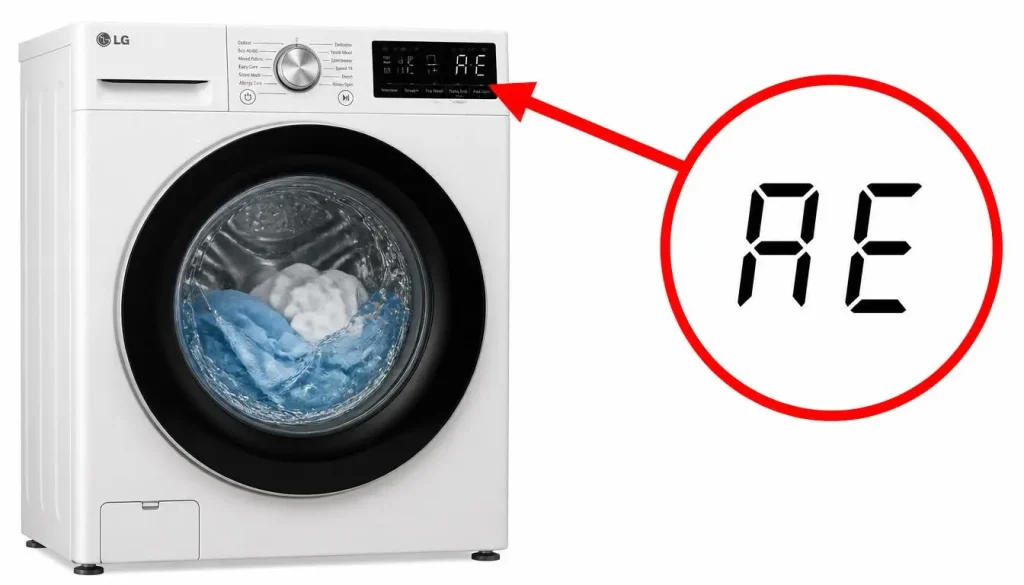
LG Washer AE Error: Causes and Solutions
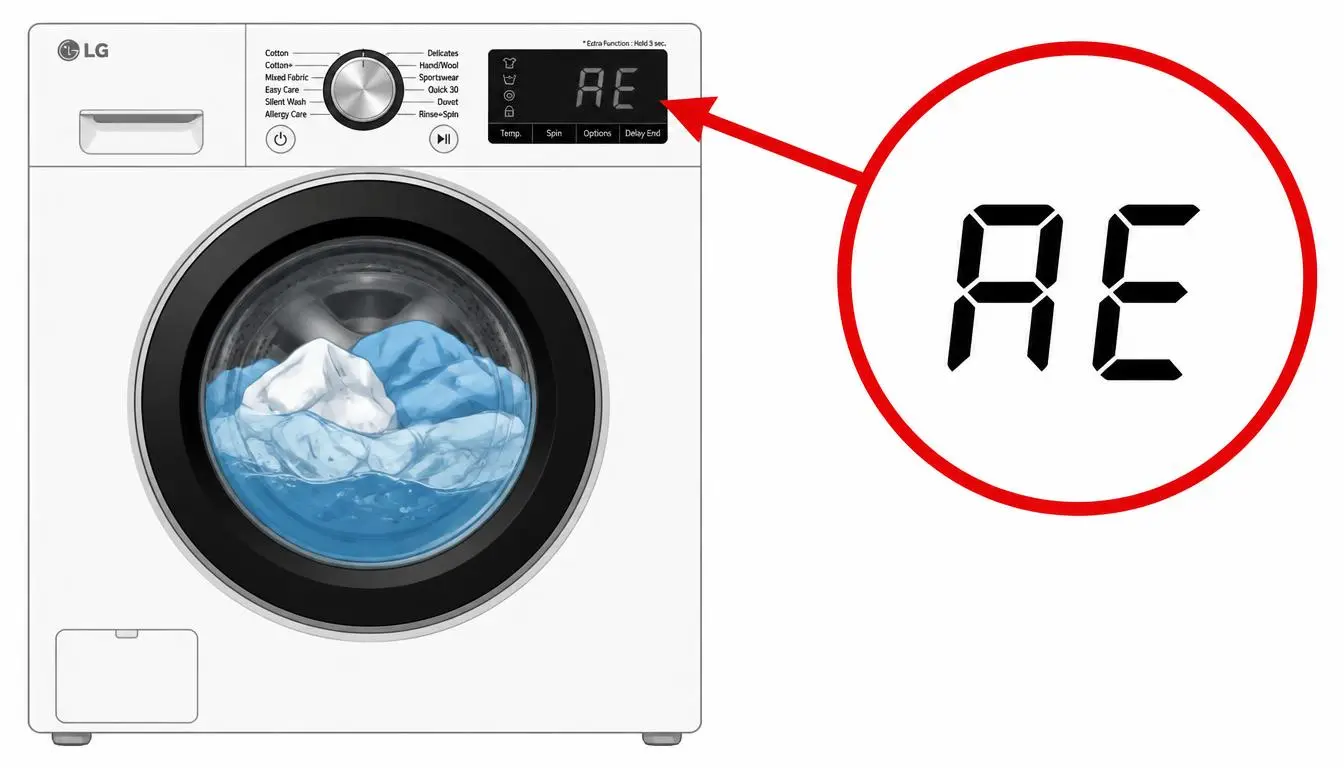
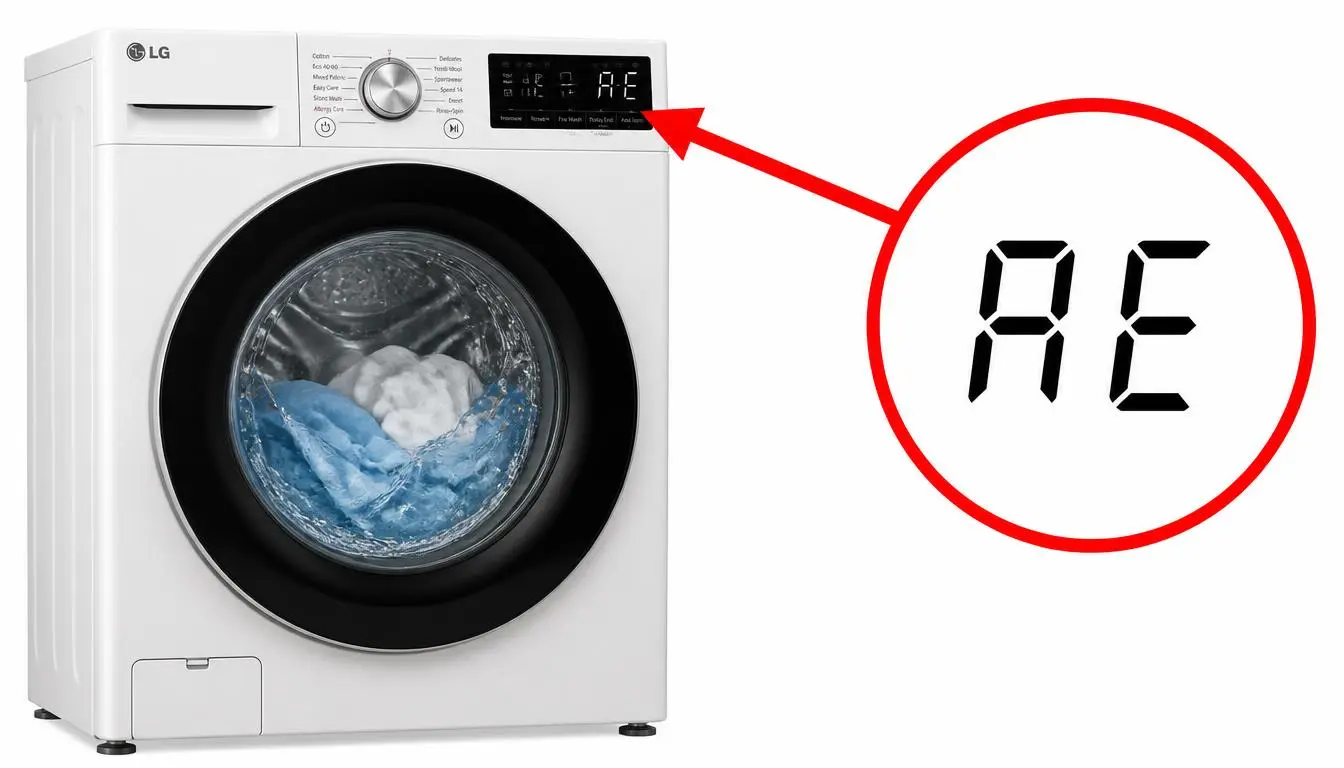
When the letters “AE” appear on the display panel of an LG washer, the machine is reporting one of its most safety-critical alerts. The LG washer AE error indicates that water has been detected inside the cabinet where it should not be, or that a related mechanical fault has occurred depending on the model type. This code requires immediate attention because water and electricity are involved, and continued operation can lead to property damage or safety hazards. Understanding what the LG washer AE error means, why it triggers, and how to respond is essential for every LG washer owner.
According to LG’s official support documentation, the AE error appears when the washer detects water leakage inside the product. LG’s troubleshooting guide for front-load models confirms that AE indicates water leakage inside the product. Independent repair sources confirm that AE on an LG washer means the leak-detection float switch in the base pan has tripped — the machine has sensed water where it should not be. Because a real internal leak can damage flooring and cabinets, AE should be treated as a stop-using-it code until the source is found.
This article explains exactly what the LG washer AE error means, the conditions that trigger it, the step-by-step procedures to identify and resolve the underlying cause, and the circumstances in which professional service is required. All information presented here is drawn from LG’s official support documentation and verified troubleshooting sources.
?What Does the LG Washer AE Error Mean
The LG washer AE error is fundamentally a leak detection alert. Modern LG washers are equipped with a safety feature often referred to as Aqua lock or a similar flood protection system. This system relies on a leakage sensor or float switch located in the base pan of the machine — the very bottom compartment underneath the drum.
When water accumulates in this pan due to a leak or overflow, the float switch rises, sending a signal to the control board to cut power to the cycle and display the AE code. This prevents the machine from filling further and potentially flooding your home. The AE error is therefore a protective measure initiated by the overflow protection system to stop the machine from operating until the leak is addressed.
LG’s official documentation describes the same mechanism. The error is specific to the water leakage detection system and does not indicate a general failure of the washing machine’s other functions. It is a targeted alert that the machine has detected water in an area where it should remain dry.
Common Causes of the LG Washer AE Error
The LG washer AE error can be triggered by several different conditions. Understanding these causes is the first step toward resolving the issue and preventing its recurrence
Torn or Displaced Door Boot Seal
The large rubber gasket around the door opening, known as the door boot seal, is a common source of leaks. This gasket can develop tears, mold damage, or become displaced when foreign objects push it out of position. Water escapes during wash and spin cycles and collects in the base pan, triggering the float switch and displaying the LG washer AE error. A field note from a senior appliance technician confirms that on LG front-loaders, the most common internal leak source is the door boot seal inner clamp losing tension. The outer clamp is easy to inspect, but the inner clamp requires removing the front panel.
Leaking Tub-to-Pump Hose
The internal hose connecting the outer tub to the drain pump can crack or work loose from its clamp. Water drips during fill and wash phases, accumulating in the base pan and activating the leak sensor. Inspecting the tub-to-pump hose connections is a key part of the diagnostic sequence for the LG washer AE error.
Leaking Detergent Dispenser Housing
The hose running from the detergent dispenser box to the outer tub can crack, or the dispenser housing itself can develop a crack. Water from the fill cycle leaks down the front of the tub and collects in the base pan. Checking the detergent dispenser hose for drips is recommended when diagnosing the AE error.
Damaged Outer Tub Seal or Spider Arm
The main tub seal where the shaft passes through the rear of the outer tub can wear out over time. Water seeps past the seal and drips into the base. A corroded spider arm — the drum support — accelerates seal failure. This is one of the most common internal leak sources and often requires professional repair.
Overfilled Detergent Causing Excess Suds
Using too much detergent, or using non-HE (High-Efficiency) detergent in a front-load washer, creates excessive suds. These suds push past the door seal during agitation. The suds condense into water in the base pan and trigger the float switch, displaying the LG washer AE error. LG front-load washers require HE detergent only, and no more than 2 tablespoons per load is recommended.
Stuck Float Switch
Sometimes there may be no water present, but the float of the anti-flood device may be stuck closed. This can trigger a false AE code. In such cases, resetting the float to its lowest position or drying the base pan resolves the issue.
Step-by-Step Troubleshooting for the LG Washer AE Error
The following steps provide a systematic approach to addressing the LG washer AE error. Because water and electricity are involved, safety must be the first priority.
Step 1: Stop the Washer and Cut Water Supply
Press the Power button to stop the cycle. Turn off the hot and cold supply valves behind the washer. Unplug the unit from the electrical outlet. Place towels around the base to catch any leaking water. This step is essential for safety and prevents further water accumulation while you investigate.
Step 2: Perform a Power Reset
Before dismantling any components, perform a basic system reset to rule out electronic glitches. Turn off the washer and unplug it completely from the electrical outlet. Press and hold the Start/Pause button for 5 seconds to dissipate any residual static electricity. Leave the machine unplugged for at least 10 to 15 minutes. While the machine is off, check the floor around the unit for wet spots near the water supply taps or the back of the washer. Plug the machine back in and attempt to run a Rinse & Spin cycle. If the error clears, it may have been a temporary sensor error. If the LG washer AE error persists, there is likely standing water in the base pan that needs to be addressed.
LG’s official Spanish support documentation confirms this approach, stating that for the AE error, you should unplug the equipment, wait 60 seconds, and try again. If the error persists, close the water inlet tap and request repair.
Step 3: Inspect the Door Boot Seal
Open the door and run your fingers around the entire rubber boot gasket. Feel for tears, punctures, or areas where the seal has pulled out of the front panel groove. Check the bottom fold of the seal — small objects like screws, bobby pins, or underwires can tear through it. If the seal is damaged or displaced, it needs to be repaired or replaced to prevent water from escaping during wash and spin cycles.
Step 4: Check for Suds Overflow
Open the detergent dispenser. If you see thick suds residue, you are using too much detergent. LG front-load washers require HE detergent only. Use no more than 2 tablespoons per load. Run an empty Rinse+Spin cycle to clear remaining suds. Excessive suds are a common and easily correctable cause of the LG washer AE error.
Step 5: Inspect Internal Hoses
Remove the lower front access panel, which is typically secured by two or three screws. With a flashlight, look at the tub-to-pump hose, the dispenser-to-tub hose, and all clamp connections. Wet spots or water trails indicate the leak source. Tighten loose spring clamps with channel-lock pliers. If a hose is cracked or split, it will need to be replaced.
Step 6: Check the Base Pan and Float Switch
Tilt the washer back carefully and look at the base pan. A small Styrofoam float or moisture sensor sits in the pan. If water is present, soak it up with a towel. A stuck float can trigger false AE codes. Reset the float to its lowest position. Once the pan is dry, the float switch should lower, resetting the error. However, this is only a temporary fix; you must find the leak to prevent the error from returning.
Step 7: Drain the Base Pan
If the base pan contains water, it must be removed to reset the sensor. Ensure the machine is unplugged. Carefully tilt the washer backward at a 45-degree angle — you may need a second person for assistance. This allows water trapped in the base pan to drain out onto the floor. Have towels ready to catch the water. Once the pan is dry, the float switch should lower, resetting the error. Again, this is only a temporary fix; the underlying leak must be identified and repaired.
Step 8: Check the Drain Pump and Filter
The drain pump area is susceptible to leaks if the filter is not seated correctly or if the pump housing is cracked. Locate the debris filter access panel on the front bottom of the washer. Open the small drain tube to empty residual water into a shallow container. Unscrew the debris filter and clean it thoroughly. Ensure the rubber seal on the filter is intact and free of debris before reinserting it. A loose filter is a common source of slow leaks that trigger the AE error.
Quick Reference Table
| Situation | What It Means | What To Do |
|---|---|---|
| AE appears on the display | Leak sensor detected water in base pan | Stop the washer and cut water supply |
| Washer stops mid-cycle | Safety protocol activated | Unplug the unit and inspect for leaks |
| Water visible under washer | Confirmed internal leak | Identify leak source before restarting |
| Thick suds in detergent dispenser | Overfilled detergent causing overflow | Use HE detergent only; run Rinse+Spin |
| Door boot seal torn or displaced | Water escapes during wash/spin | Repair or replace the door boot seal |
| Internal hose cracked or loose | Water drips into base pan | Tighten clamps or replace the hose |
| Base pan contains standing water | Float switch tripped | Drain the pan and reset the float |
| AE persists after all steps | Internal seal or tub failure | Service is required |
Frequently Asked Questions
?What does the LG washer AE error mean
The AE error indicates that the leak-detection float switch in the base pan has tripped — the machine has sensed water where it should not be. LG’s official documentation confirms that AE indicates water leakage inside the product.
?Is the LG washer AE error dangerous
Yes. Water leaks near electrical components pose shock and fire risk. You should unplug the washer before investigating. If the leak has been ongoing, check the subfloor for water damage.
?Can I fix the LG washer AE error myself
In some cases, yes. You can perform a power reset, inspect the door boot seal, check for suds overflow, inspect internal hoses, and clean the drain pump filter. However, if the leak source is the tub seal or spider arm, professional repair is required because these repairs require full drum removal.
?How do I reset the LG washer after an AE error
Turn off the washer and unplug it completely from the electrical outlet. Press and hold the Start/Pause button for 5 seconds to dissipate any residual static electricity. Leave the machine unplugged for at least 10 to 15 minutes. Then plug it back in and run a Rinse & Spin cycle.
?What causes the LG washer AE error
The most common causes are a torn or displaced door boot seal, a leaking tub-to-pump hose, a leaking detergent dispenser housing, a damaged outer tub seal or spider arm, overfilled detergent causing excess suds, and a stuck float switch.
?Why does the AE error appear even when there is no visible water
Sometimes the float of the anti-flood device may be stuck closed, triggering a false AE code even when no water is present. Resetting the float to its lowest position can resolve this.
?What should I check if the AE error keeps appearing
If the error persists after checking the door boot seal, internal hoses, detergent usage, and the base pan float switch, the internal tub seal between the inner and outer drum may have failed. This requires professional diagnosis and repair.
?When should I call a professional for the LG washer AE error
Call a technician if you see water leaking from the rear tub seal, if the door boot is torn, or if you cannot identify the leak source. Tub seal and spider arm repairs require full drum removal and should be performed by a qualified professional.
When the LG Washer AE Error Requires Service
The troubleshooting steps described above address the most common causes of the LG washer AE error. However, there are circumstances in which professional service is required.
Call a technician if you see water leaking from the rear tub seal. This indicates that the main tub seal where the shaft passes through the outer tub has worn out, allowing water to seep past the seal and drip into the base. This repair requires removing the drum assembly.
If the door boot is torn, replacement is necessary. While the outer clamp is accessible, the inner clamp requires removing the front panel, and this repair is best performed by a professional.
If you cannot identify the leak source after completing all the DIY troubleshooting steps, a technician has the tools and diagnostic equipment to locate the leak. The diagnostic sequence for the AE error includes checking for visible water under the washer, tilting the machine to inspect the base pan, checking the tub-to-pump hose connections and the door boot seal clamp, and checking the outer tub bearing seal.
A service technician may need to check or replace the following parts: the door boot seal, the tub bearing and seal kit, and the tub-to-pump hose. If no external leak is visible, the internal tub seal between the inner and outer drum has likely failed, which requires removing the drum assembly.
It is important not to continue running cycles repeatedly when the LG washer AE error persists. Continued operation with an active leak can lead to water damage to your flooring and cabinets, and poses shock and fire risk due to water near electrical components.
Preventing the LG Washer AE Error
While the LG washer AE error cannot always be prevented, certain practices reduce the likelihood of its occurrence. Using only HE (High-Efficiency) detergent and measuring no more than 2 tablespoons per load prevents excessive suds that can push past the door seal and trigger the AE error.
Regularly inspecting the door boot seal for tears, debris, and proper positioning helps maintain a watertight seal. Cleaning the drain pump filter periodically prevents clogs that can cause slow leaks. Checking the internal hoses for cracks, kinks, or loose clamps during routine maintenance helps identify potential leak sources before they cause significant water accumulation.
Keeping the area behind and under the washer dry and free of standing water helps maintain the leak detection system’s ability to function properly. By following these preventive practices, you can reduce the chance of encountering the LG washer AE error and help ensure that your washing machine operates safely cycle after cycle.
